
Artificial intelligence is revolutionizing the way students learn science, technology, engineering, and math. By integrating smart tools into curricula, educators are creating more engaging, effective, and accessible learning environments. This guide explores the massive shift brought by AI in STEM education.
You will learn exactly how artificial intelligence in STEM education works and why it matters. We cover the core benefits, practical tools, and global impact of this technology. By the end, you will understand how to leverage these innovations in your own classroom or institution.
Key takeaways from this post include:
- The primary benefits of AI in STEM education.
- How personalized learning with AI improves student outcomes.
- The best AI tools for STEM education available today.
- How to prepare students for a tech-driven global economy.
Understanding the Role of AI in STEM Education
The role of AI in STEM education is to act as an intelligent facilitator that adapts to student needs. It moves classrooms away from a one-size-fits-all model toward deeply individualized instruction. Teachers can use data-driven insights to guide their lesson plans effectively.
Integrating AI technology in classrooms helps break down complex topics into digestible pieces. Whether a student is learning basic coding or advanced robotics, AI provides instant feedback. This immediate response keeps students motivated and on track.
How AI Technology in Classrooms Works
Smart algorithms analyze student interactions to adjust the difficulty of tasks in real-time. If a learner struggles with a specific math concept, the system provides additional practice and resources. This ensures mastery before moving on to new material.
Using AI in classroom teaching also frees up valuable time for educators. Automated grading and lesson planning allow teachers to focus on one-on-one mentorship. The technology handles the administrative heavy lifting.
Core Benefits of AI in STEM Education
The most significant advantage of AI is its ability to boost student engagement and comprehension. Interactive environments, powered by machine learning, make abstract STEM concepts tangible. Students learn by doing, supported by intelligent guidance.
Other major benefits of AI in STEM education include improved accessibility and scalability. Schools worldwide can offer high-quality resources regardless of their physical limitations. This levels the playing field for learners everywhere.
Personalized Learning with AI
Personalized learning with AI means every student gets a customized educational journey. The software learns the student’s strengths, weaknesses, and preferred learning pace. It then curates content specifically tailored to maximize their potential.
This approach ensures no student is left behind or bored by a slow pace. AI for STEM learning keeps high achievers challenged while supporting those who need extra help. It acts like a 24/7 personal tutor for every child.
Real-Time Adaptability
Adaptive learning systems modify content on the fly based on user input. As a student answers questions, the AI calculates their proficiency instantly. This creates a highly dynamic and responsive learning loop.
Top AI Tools for STEM Education
Educators have access to an impressive array of AI-powered learning tools today. These range from smart robotics kits to virtual reality science labs. Implementing these tools is crucial for modernizing the curriculum.
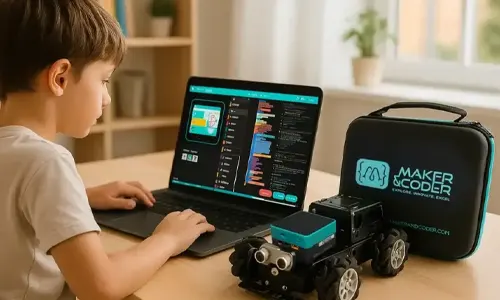
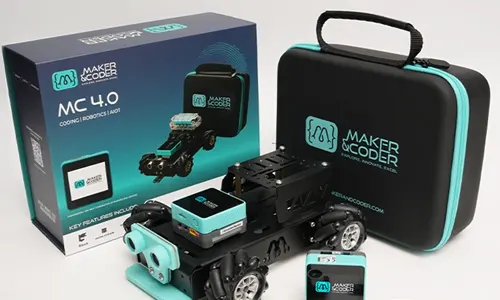
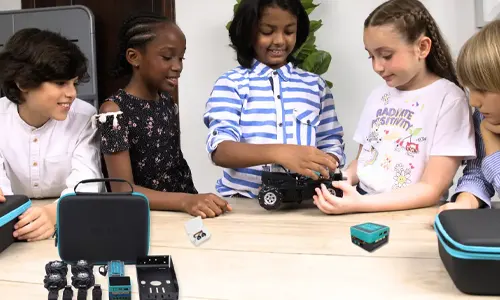
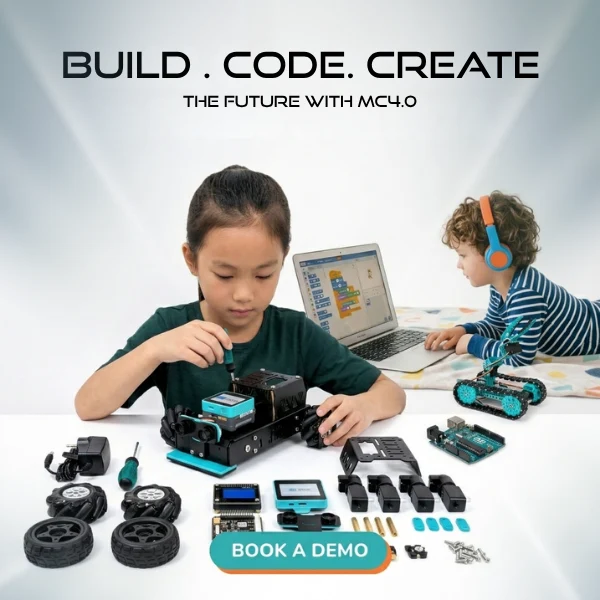
Using the right AI tools for STEM education bridges the gap between theory and practice. Students can build, test, and refine projects using industry-standard technology. Maker and Coder provides several kits designed specifically for this purpose.
AI-Powered Learning Tools in Action
Intelligent tutoring systems are among the most popular AI-powered learning tools. They guide students through complex problem-solving steps, offering hints when they get stuck. This scaffolds the learning process effectively.
Another great example is language processing tools that help students write better technical reports. These systems ensure that communication skills develop alongside technical abilities.
Virtual Labs and Simulations
Virtual labs allow students to conduct experiments safely and cost-effectively. They can mix virtual chemicals or test structural engineering designs without physical materials. This removes budget constraints from high-level science education.
Enhancing AI in Science and Engineering Education
AI in science and engineering education allows for limitless experimentation. Students can run thousands of simulations in seconds to see how variables affect outcomes. This mirrors exactly how professional engineers and scientists use AI in the real world.
Global Impact: AI in Classroom Teaching Worldwide
The integration of AI is a truly global movement, transforming classrooms on an international scale. Countries worldwide are updating their education policies to include AI literacy. Preparing students for a globalized workforce is now a top priority.
This international push ensures students can compete in a worldwide tech economy. Sharing data and educational strategies across borders helps improve AI models. The worldwide collaboration in STEM education benefits everyone involved.
AI for Student Performance Analysis
AI for student performance analysis gives teachers unprecedented insight into class progress. Dashboards highlight exactly where the class is succeeding and where they are falling behind. This allows for rapid, targeted interventions.
Instead of waiting for end-of-term exams, teachers can correct course immediately. Predictive analytics can even identify students at risk of failing before it happens. This proactive approach drastically improves graduation and success rates.
Overcoming Challenges in AI Integration
Data privacy and the digital divide are the main challenges to implementing AI. Schools must ensure that student data is securely stored and used ethically. Strong policies and transparent communication with parents are essential.
Additionally, we must ensure equitable access to these technologies. Equipping rural and underfunded schools with the necessary hardware is vital. Teacher training programs are also required so educators feel confident using these new tools.
Maker and Coder: Your Partner in AI for STEM Learning
Maker and Coder provides comprehensive kits and resources to seamlessly integrate AI into your curriculum. We design our robotics and STEM products to be intuitive, engaging, and highly educational. We empower both students and teachers to embrace the future.
Explore our range of robotics kits and STEAM resources to bring your classroom to life. We are dedicated to fostering the next generation of innovators and problem solvers.
Conclusion
Integrating AI into STEM education is no longer optional; it is essential for future readiness. From highly personalized learning paths to advanced performance analysis, the benefits are undeniable. By adopting these technologies, we empower students to thrive in a digital world.
Take the next step in modernizing your educational approach. Explore Maker and Coder’s specialized AI and robotics kits today, and transform your classroom into a hub of innovation.
Frequently Asked Questions (FAQ)
What is the primary role of AI in STEM education?
The primary role is to provide personalized, adaptive learning experiences. It helps educators analyze student performance and tailor instruction to individual needs.
How does personalized learning with AI work?
AI algorithms track a student’s progress and adjust the difficulty of the material in real-time. This ensures the student is always challenged but never overwhelmed.
What are some common AI tools for STEM education?
Common tools include intelligent tutoring systems, virtual science labs, automated grading software, and smart robotics kits.
How does AI help teachers in the classroom?
AI automates administrative tasks like grading and lesson planning. It also provides detailed analytics on student performance, allowing teachers to focus on individualized support.
Is AI in education a global trend?
Yes, schools worldwide are adopting artificial intelligence in STEM education. It is an international effort to prepare students for a highly technical global workforce.
Author Bio
Maker and Coder is a leader in educational technology, dedicated to transforming how students and teachers engage with AI and STEM education. With a strong focus on innovation, Maker and Coder creates hands-on learning experiences through robotics, programming, and smart classroom solutions. The brand’s mission is to make AI and STEM education accessible, exciting, and impactful for learners across the globe, empowering the next generation of innovators and problem solvers.