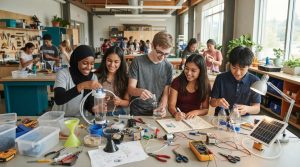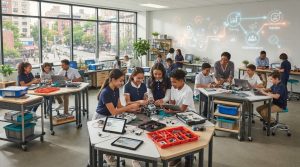
Integrating creative projects into modern curriculum transforms how students understand technology. Educators need practical, hands-on activities that move beyond theory and build tangible skills. This guide provides actionable artificial intelligence classroom projects designed to boost engagement and critical thinking. You will learn how to implement these ideas across different grade levels using accessible platforms.
AI education projects bridge the gap between abstract concepts and real-world problem-solving. Students who build their own models develop a deep intuition for how data shapes our global infrastructure. We compiled this list of hands-on AI learning projects for schools to help educators seamlessly integrate technology. Expect clear instructions, core learning outcomes, and practical tips for immediate classroom deployment.
These Creative AI Education Projects prepare learners for an international workforce driven by automation. By focusing on practical application, educators empower students to become creators rather than just consumers of technology. Let us explore the best simple AI projects for learning machine learning that you can start using right away.
Why AI Projects for STEM Education Matter
AI projects for STEM education teach essential logic, coding, and data analysis skills simultaneously. Working directly with algorithms forces students to troubleshoot errors, test hypotheses, and iterate on their designs. These core competencies translate directly into better performance across all science and math disciplines.
Building creative AI projects for students also highlights the ethical implications of artificial intelligence. When learners create biased or flawed models, they immediately see the importance of diverse data collection. This hands-on experience builds responsible digital citizens who understand technology’s worldwide impact.
Implementing AI project ideas for high school students gives them a distinct advantage in college and career readiness. Top universities and international employers actively seek candidates with demonstrated machine learning experience. A strong portfolio of completed projects proves a student’s ability to tackle complex technical challenges.
Top AI Creative Projects for Classrooms
1. Build a Personalized Educational Chatbot
Creating a custom chatbot stands out as one of the best beginner AI projects for students. Students use natural language processing (NLP) tools to program a bot that answers specific subject-matter questions. This project teaches basic programming logic and conversation flow mapping in an intuitive way.
Educators can theme this project around historical figures, scientific concepts, or global geography. A student might build a chatbot that responds entirely as Abraham Lincoln or Marie Curie. Role-playing through AI forces students to deeply research their chosen topic to provide accurate automated responses.
Key Learning Outcomes:
- Understanding natural language processing (NLP).
- Structuring conditional logic and decision trees.
- Refining data inputs for better AI accuracy.
2. Design an AI-Powered Recommender System
Recommender systems offer excellent AI project ideas for beginners interested in data science. Students build a basic engine that suggests books, movies, or music based on user input data. This activity demystifies the algorithms behind platforms like Netflix, Spotify, and YouTube.
To execute this project, students collect preference data from their peers to train their recommendation model. They learn how collaborative filtering groups users with similar tastes to predict future choices. Analyzing peer data makes the learning process highly interactive and socially engaging.
Key Learning Outcomes:
- Mastering data collection and dataset formatting.
- Applying collaborative and content-based filtering.
- Identifying algorithm biases in recommendation engines.
3. Create a Simple Image Classification Model
Image classification is a fundamental entry point for simple AI projects for learning machine learning. Students train an AI model to distinguish between different objects, such as cats versus dogs or recycling versus trash. Using visual data makes the training process immediately observable and highly rewarding.
Many free, web-based tools allow students to train these models using their computer webcams. They hold up different objects, capture hundreds of images, and test the machine’s predictive accuracy in real-time. Rapid prototyping keeps students motivated as they tweak their datasets to improve the model’s performance.
Key Learning Outcomes:
- Grasping the basics of computer vision.
- Understanding the importance of large training datasets.
- Testing and validating machine learning accuracy.
4. Develop an Interactive AI-Driven Game
Game development ranks among the most popular AI Projects for Students globally. Learners program simple games where the computer opponent adapts to the player’s strategy over time. Applying reinforcement learning to a game environment makes abstract AI concepts incredibly fun to learn.
Students can start by building a smart Tic-Tac-Toe opponent or a predictive Rock-Paper-Scissors bot. The AI analyzes the human player’s patterns and adjusts its own moves to maximize its chances of winning. Gamifying artificial intelligence ensures high engagement and encourages persistent problem-solving.
Key Learning Outcomes:
- Implementing reinforcement learning mechanics.
- Programming dynamic, state-based variables.
- Balancing difficulty curves in software design.
5. Automate a Real-World Data Analysis Task
Automating data analysis provides practical, hands-on AI learning projects for schools. Students take a large dataset like global weather patterns or international census data—and use AI to find hidden trends. Working with real-world numbers shows students the sheer scale of modern data processing.
Educators can source free datasets from worldwide health organizations or global economic databases. Students write simple scripts to clean the data and let the AI generate predictive charts and graphs. Visualizing complex data helps students communicate their findings clearly to their peers.
Key Learning Outcomes:
- Cleaning and organizing raw data formats.
- Using predictive analytics to forecast trends.
- Generating automated data visualizations.
6. Experiment with Generative AI Art
Generative art merges computer science with creativity, making it a perfect artificial intelligence classroom project. Students use generative adversarial networks (GANs) or diffusion models to create unique digital artwork. Blending art and STEM engages students who might otherwise avoid strictly technical subjects.
Learners experiment with text prompts, tweaking their language to alter the AI’s artistic output. They learn how specific adjectives, lighting terms, and stylistic references drastically change the generated image. Prompt engineering is rapidly becoming a vital skill in the modern international workplace.
Key Learning Outcomes:
- Understanding generative AI architecture.
- Developing precise prompt engineering skills.
- Exploring the ethics of AI-generated media.
7. Train a Voice Recognition Assistant
Building a basic voice assistant introduces students to speech-to-text machine learning models. This stands out among creative AI projects for students because it replicates devices they use daily. Programming voice commands requires students to think critically about accessibility and user interface design.
Students record specific trigger words and train the system to execute tasks upon hearing those words. They might program the AI to turn a digital lightbulb on or open a specific webpage. Testing diverse accents and voices teaches students about the necessity of inclusive data sets.
Key Learning Outcomes:
- Processing audio data for machine learning.
- Writing executable scripts tied to vocal triggers.
- Addressing bias in voice recognition software.
8. Program a Smart Robotics Navigation System
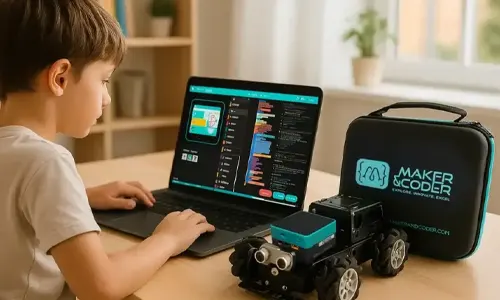
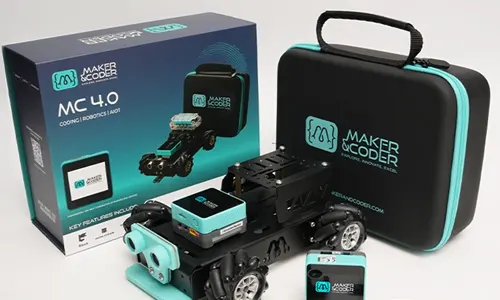
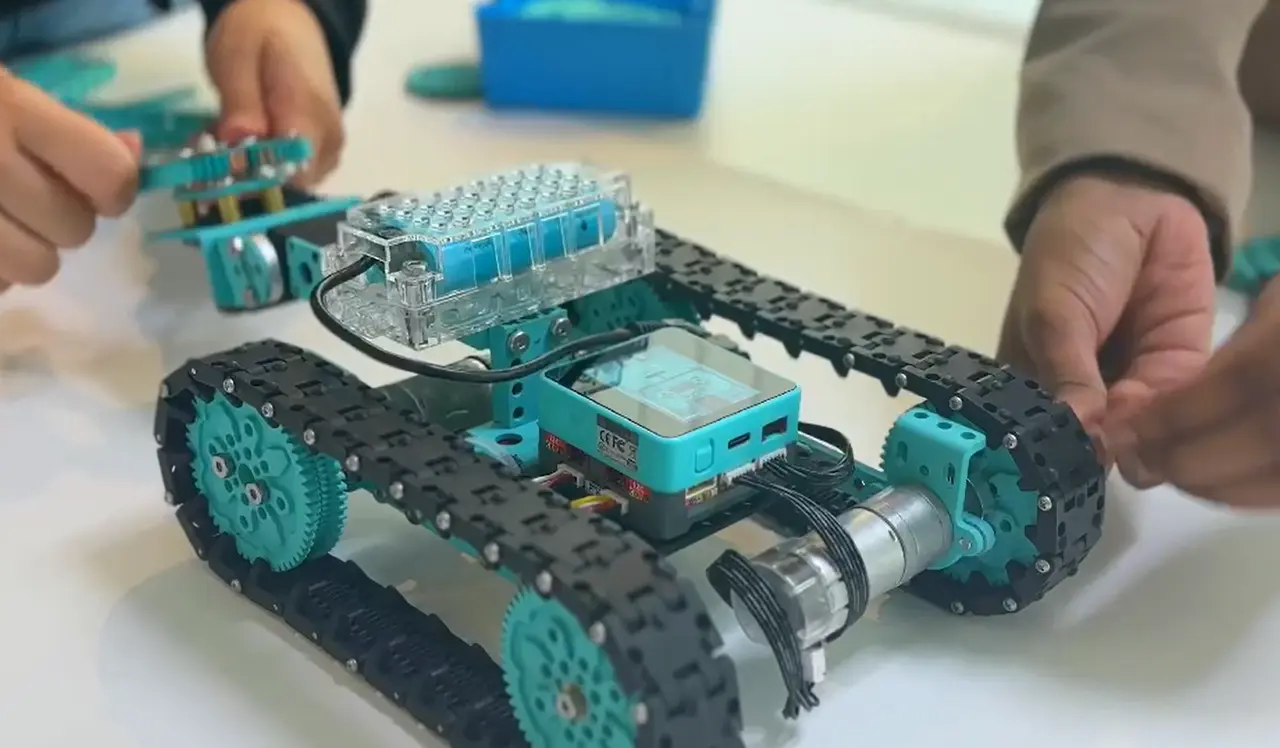
Combining AI with physical robotics delivers the ultimate hands-on engineering experience. Students program a small rover to navigate a maze using sensors and machine learning algorithms. Physical computing solidifies software concepts by bringing code into the tangible world.
The robot uses trial and error to learn the fastest route through the obstacle course. Students monitor the AI’s learning progress and adjust the reward parameters in the code to improve efficiency. Integrating hardware and software prepares students for advanced engineering and international robotics competitions.
Key Learning Outcomes:
- Connecting AI models to physical sensors.
- Tuning algorithms for spatial awareness.
- Troubleshooting hardware-software integration.
How to Implement Artificial Intelligence Classroom Projects
Start with Accessible Web-Based Tools
Educators should rely on browser-based platforms to launch beginner AI projects for students. These tools require zero software installation and run smoothly on standard school Chromebooks or tablets. Removing technical barriers ensures that lesson time is spent learning concepts, not troubleshooting local computer errors.
Emphasize Data Ethics Early
Every ai education project must include a discussion about data privacy and algorithmic bias. Students need to understand where training data comes from and who owns the intellectual property. Teaching ethical AI usage prevents the misuse of technology and fosters responsible global citizens.
Encourage Collaborative Problem Solving
AI development mimics the real-world tech industry, which relies heavily on teamwork and peer review. Assign AI projects for STEM education in small groups to promote communication and task delegation. Collaborative coding helps students catch errors faster and produces more robust, creative solutions.
Frequently Asked Questions (FAQ)
What are the best AI project ideas for beginners?
The best AI project ideas for beginners include building a simple chatbot, creating an image classifier, or designing a basic recommender system. These projects require minimal coding experience and use visual, drag-and-drop interfaces. Starting with visual data helps beginners grasp core concepts quickly before moving to text-based code.
How do AI projects for STEM education benefit students?
AI projects for STEM education build critical thinking, coding proficiency, and data literacy. They move students from passive software users to active technology creators who understand backend logic. Hands-on machine learning directly improves problem-solving skills applicable across all scientific disciplines.
Can we do hands-on AI learning projects for schools without a large budget?
Yes, thousands of hands-on AI learning projects for schools use completely free, browser-based tools. Platforms provided by major tech companies offer robust educational tiers at no cost to international classrooms. You only need an internet connection to access powerful machine learning models and datasets.
What makes a good artificial intelligence classroom project?
A good artificial intelligence classroom project connects technical skills to real-world, global issues. It should be highly interactive, allow for creative freedom, and produce a tangible end product. Connecting AI to student interests—like gaming or art—guarantees higher engagement and better knowledge retention.
Are there simple AI projects for learning machine learning in high school?
High schools can implement simple AI projects for learning machine learning like predictive text generators or automated data analyzers. These projects use Python and pre-built libraries to simplify the coding process. Using established AI libraries allows high schoolers to build complex, professional-grade models efficiently.
Author Bio
Maker and Coder is a global platform dedicated to empowering the next generation of technologists, educators, and innovators. We specialize in providing comprehensive resources, STEAM kits, and curriculum guides that make complex tech accessible to everyone. Our mission is to transform worldwide education by integrating hands-on robotics, coding, and artificial intelligence into everyday classroom learning. We believe that by providing the right tools, every student can become a creative problem-solver ready to tackle global challenges.